
Collect thoughtfully
Keep suitable scraps separate from packaging and hard non-food materials. Drain excess liquid and reduce the size of large pieces.
HOW IT WORKS / A CLOSER LOOK
A practical guide to the process, its limits and the habits that keep countertop processing manageable.
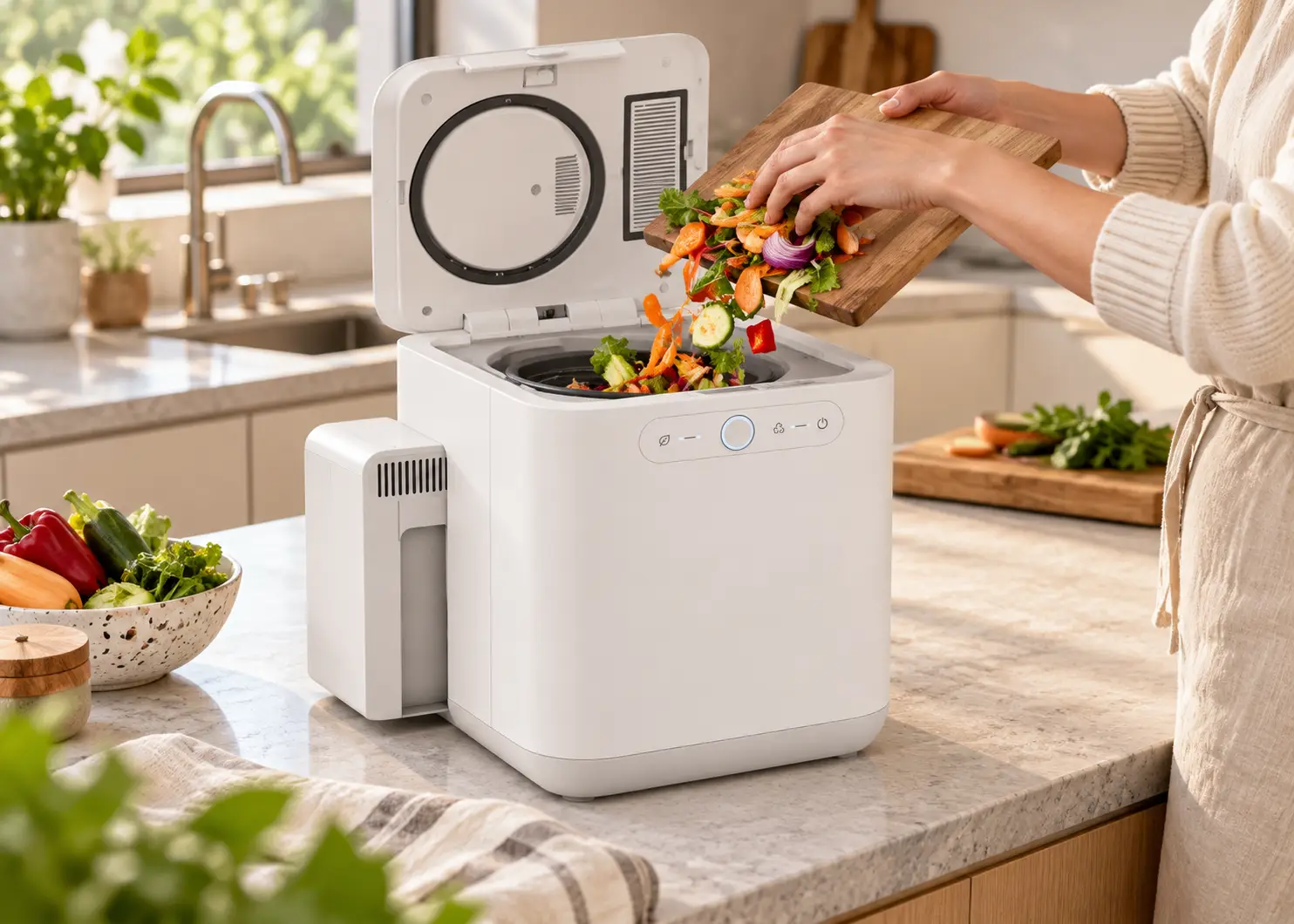
THE DAILY CYCLE
The process is a sequence of collection, processing and handling. It is not an instant substitute for municipal collection or a complete composting system.
Keep suitable scraps separate from packaging and hard non-food materials. Drain excess liquid and reduce the size of large pieces.
Stay within the appliance's marked limits. Secure the container and lid before starting a permitted cycle.
Drying and agitation help reduce moisture and alter texture. Time, sound and output vary with the load and operating conditions.
Let the chamber cool if directed, remove the material and decide whether further composting or another approved route is appropriate.
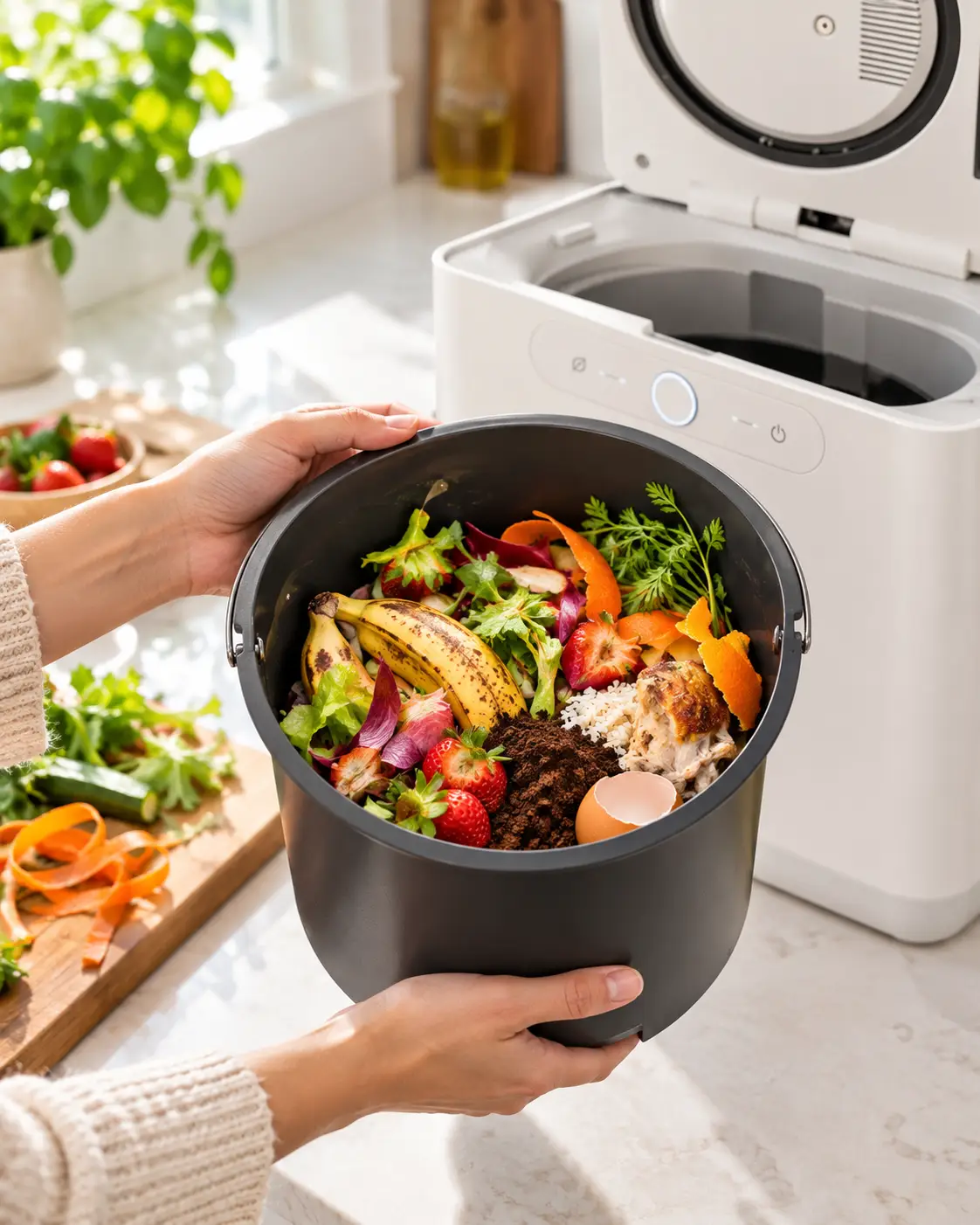
WHAT BELONGS INSIDE
Compatibility depends on the specific appliance and its operating manual. Begin with moderate amounts of familiar soft plant-based scraps and check any exclusions before use.
Common candidates to check: fruit and vegetable peels, small plant trimmings and selected cooked leftovers, where the product manual permits them.
Items requiring special attention: very hard shells, large bones, greasy liquids, thick fibrous stems and large quantities of wet scraps.
Do not process: plastic, foil, glass, cleaning chemicals, batteries or other non-food materials.
CARE & UPKEEP
Good performance depends on using and maintaining the device as directed; regular housekeeping is a part of ownership.
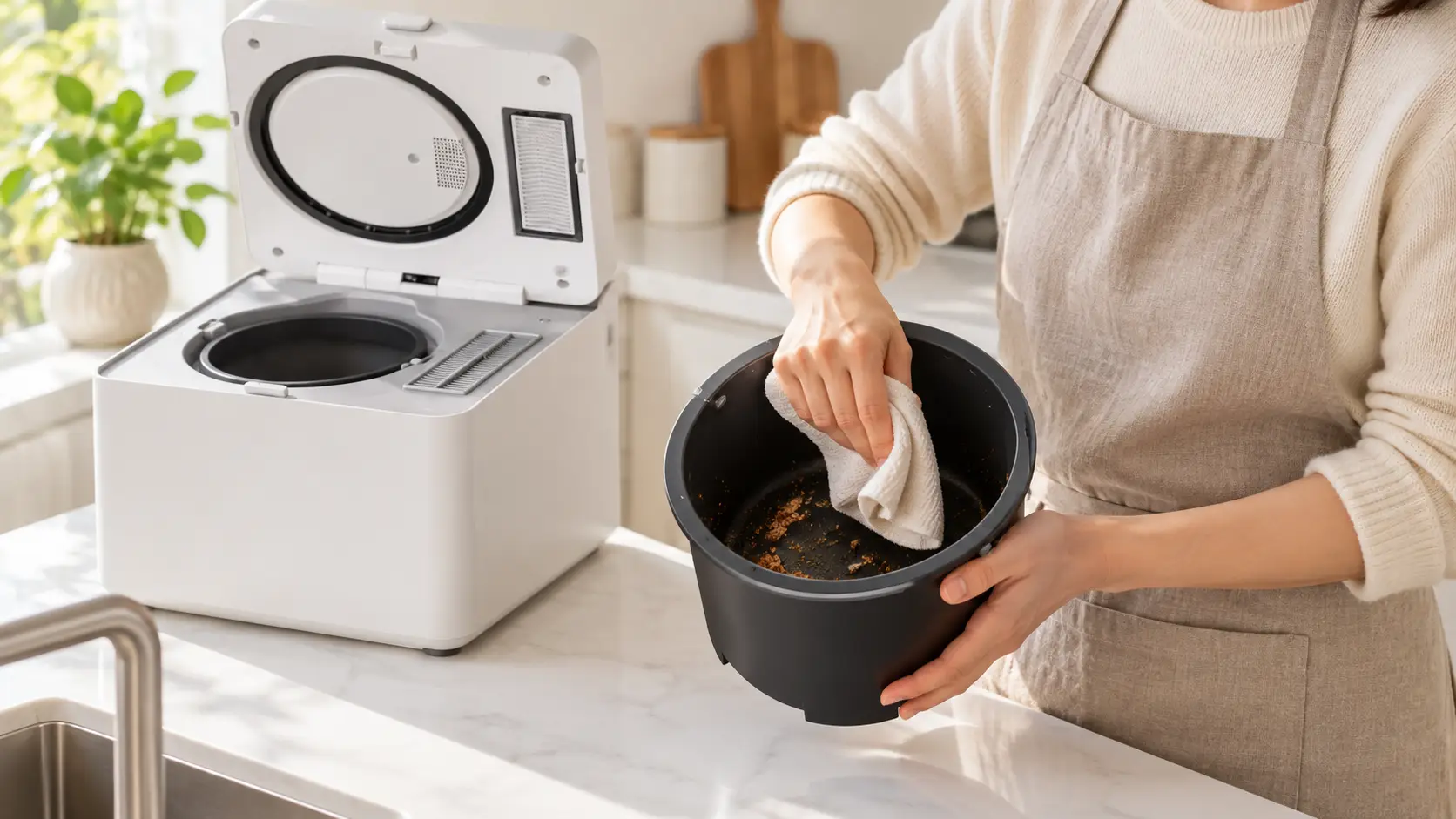
Follow the manufacturer's cooldown guidance. Empty the chamber, remove debris and wipe compatible contact surfaces only after disconnecting power if cleaning instructions require it.
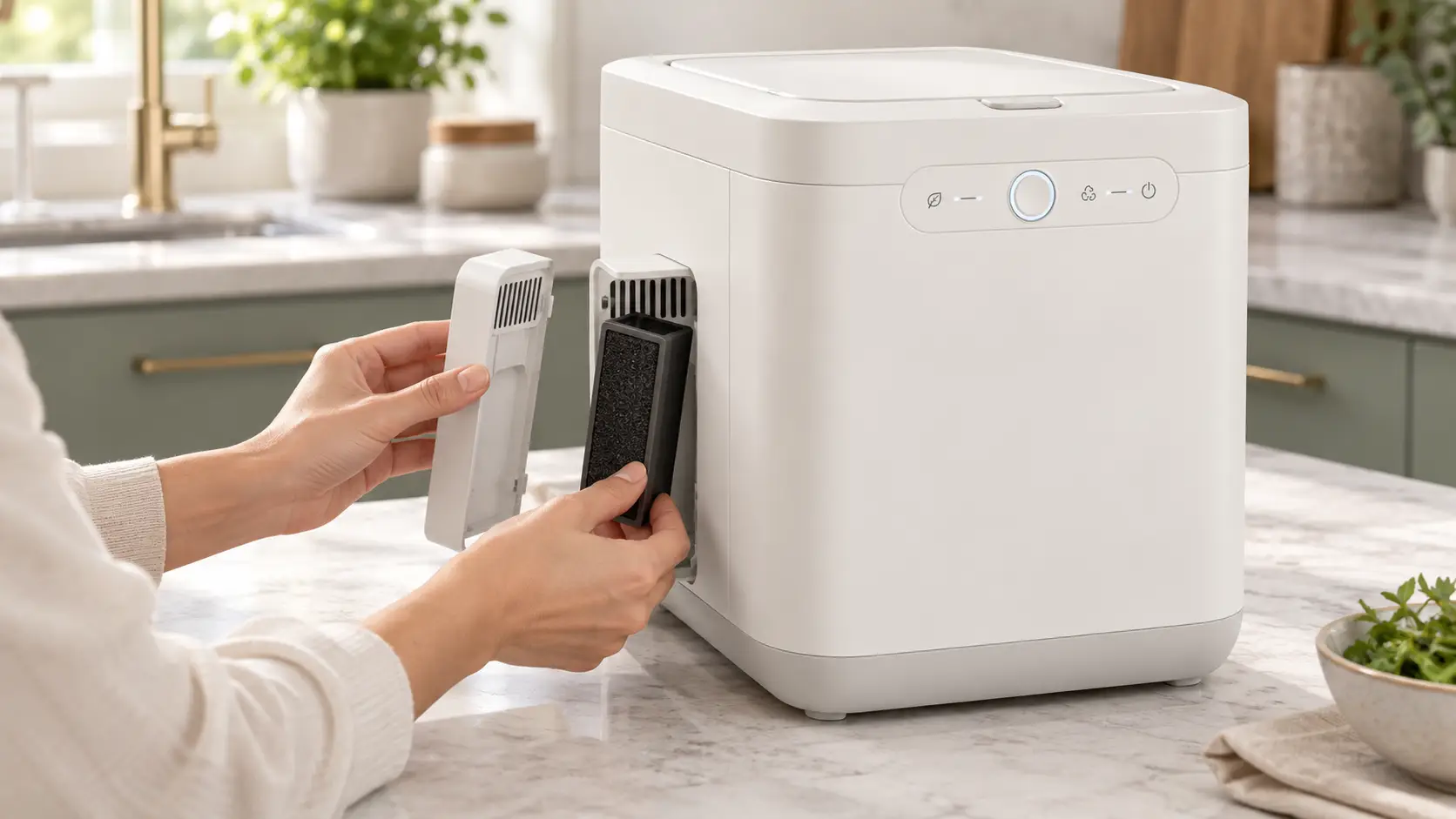
Inspect the filter on the schedule supplied with the appliance. Keep vents unobstructed and never bypass manufacturer safety systems.
CLEAR ANSWERS
The answers below describe sensible expectations, not universal performance guarantees.
No. Heat-processed material is not automatically mature compost. Any soil use requires checking product guidance and local recommendations; further composting may be necessary.
No. Food compatibility varies by model. Keep packaging, chemicals and other non-food items out, and follow the supplied list of included and excluded food types.
Timing is affected by the starting moisture, load size and cycle selection. There is no single duration that applies to every household or every batch.
Yes. Emptying and cleaning the chamber, maintaining filters, allowing ventilation and referring to the operation manual are all part of ordinary ownership.